Villeen Blog
The Race to Space — Villeen Blog
AI Will Expand Our Minds. Space Will Expand Our Civilization.
By Samuel Olamide ·
There are two technological revolutions happening at the same time.
Most people are paying attention to only one of them.
The first is artificial intelligence.
AI is learning to write software, generate images, analyze scientific problems, operate machines and increasingly perform tasks that once required human intelligence.
The second revolution is happening above our heads.
Rockets are becoming reusable. Satellites are becoming cheaper and more capable. Private companies are developing lunar landers. Commercial space stations are being designed. Governments are beginning to treat private companies not merely as contractors, but as infrastructure providers.
And something much bigger is hiding underneath all of this:
Human civilization is beginning to expand beyond Earth.
That may ultimately be more important than almost any individual space mission.
Because civilization has always been a story of expansion.
First, humans expanded across continents.
Then we connected those continents with ships, railways, airplanes and telecommunications.
Now we are beginning to build the infrastructure required to connect Earth with the rest of the Solar System.
And AI may be the technology that allows us to actually operate that civilization.
We Are Still Living on One Planet
Consider how strange our current situation is.
Billions of humans live on a single planet.
Almost everything we need—food, energy, minerals, manufacturing infrastructure—comes from the same relatively thin layer of rock, water and atmosphere.
Our entire civilization exists inside a tiny region of the universe.
For most of history, we had no choice.
Space was simply too expensive to reach.
That is changing.
Not because space suddenly became easier.
Because spaceflight is becoming an industry.
That distinction matters.
The early space age was dominated by governments.
The United States and the Soviet Union built enormous rockets because national prestige, military competition and scientific exploration justified the cost.
But a civilization cannot build a permanent economic frontier using government-funded expeditions alone.
Eventually, somebody has to figure out how to make the infrastructure economically useful.
That is where companies such as SpaceX, Blue Origin, Rocket Lab, Axiom Space, Sierra Space, Vast and others enter the story.
And this is where things get interesting.
SpaceX's Most Important Innovation Isn't a Rocket
People often describe SpaceX's achievement as “reusable rockets.”
That is true.
But it misses the deeper idea.
SpaceX is trying to change the economics of spaceflight.
For decades, launching something into orbit meant essentially throwing a giant machine away.
Imagine if every commercial airplane disappeared after one flight.
Air travel would be an absurdly expensive business.
The breakthrough wasn't simply inventing an airplane.
It was creating an airplane that could fly repeatedly.
SpaceX applied that logic to rockets.
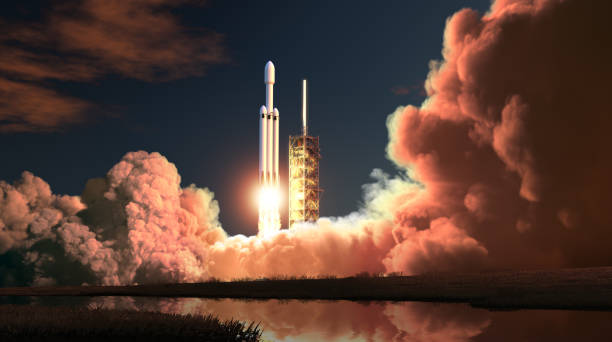
Falcon 9 demonstrated that a rocket's first stage could return to Earth and fly again. The company's Starship architecture pushes the concept toward an even more ambitious goal: a highly reusable transportation system capable of carrying people and cargo to Earth orbit and, eventually, destinations such as the Moon and Mars.
NASA itself increasingly operates within this commercial ecosystem, purchasing transportation and other capabilities from private providers rather than building every system internally.
That represents a fundamental change.
The question is no longer:
“Can humans reach space?”
We already know the answer.
The question is:
“Can humans reach space often enough, cheaply enough and reliably enough to build an economy there?”
That is a much more consequential question.
Blue Origin Is Thinking About the Road, Not Just the Destination
SpaceX is not alone.
Blue Origin has approached the problem from another angle.
Its philosophy is centered around building infrastructure that makes space accessible at larger scale.
Its New Glenn rocket is designed around reusability, while the company is simultaneously pursuing lunar infrastructure and Orbital Reef, a commercial space station concept being developed with partners and NASA support.
NASA has been deliberately encouraging this transition.
The agency's long-term plan is to move from operating the International Space Station toward purchasing services from commercially operated destinations in low Earth orbit. NASA's strategy explicitly envisions government and private customers using a future marketplace for microgravity services.
Read that again.
A marketplace in space.
That phrase would have sounded absurd a few decades ago.
Now it is part of an actual government strategy.
The Space Station Is Becoming Real Estate
This may be one of the most important changes in the space industry.
For decades, the International Space Station was essentially the destination.
Now we are moving toward a world where the ISS becomes one of the historical predecessors of something much larger.
Commercial stations.
Axiom Space is developing Axiom Station.
Blue Origin is developing Orbital Reef.
Starlab is being developed as another commercial destination.
Vast is developing Haven-1.
NASA has supported several of these efforts because it wants to eventually become one customer among many rather than the sole reason the infrastructure exists.
Imagine what happens if that model works.
Researchers could rent laboratory space in orbit.
Companies could perform manufacturing experiments.
Pharmaceutical companies could conduct microgravity research.
Tourists could visit.
Governments could conduct experiments.
Robotic companies could test autonomous systems.
Startups could build businesses around orbital infrastructure.
Space stops being a destination.
It becomes a place where economic activity happens.
And that is when civilization begins to change.
The Moon Is Not Just a Destination
The same principle applies to the Moon.
The popular imagination tends to think of lunar exploration as:
“Let's put humans on the Moon again.”
That is only the beginning.
The more interesting question is:
What happens after we establish the ability to routinely move people, machines and materials between Earth and the Moon?
NASA's commercial lunar initiatives are already structured around private companies delivering scientific and technological payloads to the lunar surface. SpaceX and Blue Origin are also developing human landing systems for Artemis.
Eventually, lunar infrastructure could support communications, scientific research, construction, transportation and resource utilization.
And one resource is particularly interesting:
water.
If usable water ice can be extracted economically from the Moon, it could become more than something astronauts drink.
Water can be separated into hydrogen and oxygen.
Those are rocket propellants.
That means lunar resources could potentially become part of the transportation infrastructure for deeper space.
This introduces a profound idea:
The Solar System could eventually become a place where spacecraft acquire resources from space rather than carrying everything from Earth.
That is the beginning of a true space economy.
And Then There Is AI
This is where the story becomes much bigger.
Because building civilization in space isn't simply an engineering problem.
It is an intelligence problem.
Space is enormous.
Communication takes time.
Environments are hostile.
Machines must operate in places where humans cannot easily intervene.
A rover on Mars cannot wait for a human operator to tell it what to do every few seconds.
A robotic mining system on the Moon cannot constantly depend on engineers sitting in a control room on Earth.
An orbital manufacturing facility may eventually need to diagnose problems, manipulate equipment and repair itself without waiting for a human astronaut.
The more complex space infrastructure becomes, the more autonomous it must become.
And that is exactly where AI enters.
AI could allow spacecraft to navigate autonomously.
Robots could identify geological resources.
Machines could construct habitats.
Systems could monitor their own health and predict failures.
AI could coordinate fleets of satellites.
Robotic factories could optimize manufacturing processes.
Autonomous systems could inspect and repair infrastructure.
And eventually, AI could help manage entire networks of machines spread across the Earth-Moon system.
The irony is beautiful.
The technology that may help us expand beyond Earth is the same technology that may reduce the number of humans required to operate that expansion.
AI and Space Are Not Separate Revolutions
We tend to talk about AI and space as completely different industries.
They aren't.
They could eventually become deeply interconnected.
AI needs enormous amounts of computing infrastructure.
Computing requires energy.
Energy requires infrastructure.
And infrastructure increasingly has to deal with the physical constraints of Earth.
This raises an intriguing possibility:
What happens when some computing infrastructure moves into space?
Solar energy is abundant beyond Earth's atmosphere.
Orbital infrastructure could potentially provide access to sunlight without some of the constraints experienced by terrestrial data centers.
Space-based computing remains technically and economically challenging, and it is far from being a solved problem.
But the idea is no longer pure science fiction.
SpaceX, for example, has discussed the possibility of orbital computing as part of the future evolution of its space infrastructure.
And if AI eventually becomes one of civilization's most important industrial resources, the location of computing infrastructure may become an increasingly important question.
The future data center may not always sit on Earth.
Some may orbit above it.
The Most Valuable Space Company Might Not Exist Yet
This is perhaps the most exciting part.
When a new infrastructure layer appears, the biggest companies are not always the companies that build the infrastructure.
The internet created an infrastructure layer.
Then came Google.
Amazon.
Facebook.
Netflix.
Uber.
Airbnb.
Cloud computing.
An entire ecosystem appeared that nobody could have completely predicted when the first networks were being built.
Space could follow the same pattern.
Imagine a world where orbital transportation is relatively cheap.
What companies become possible?
Perhaps:
Orbital logistics companies.
Moving equipment between stations.
Space construction companies.
Building enormous structures in orbit.
Lunar resource companies.
Extracting and processing materials.
Space manufacturing companies.
Producing materials that benefit from microgravity.
Orbital computing companies.
Operating data centers beyond Earth.
Space insurance companies.
Insuring increasingly complex infrastructure.
Interplanetary communications companies.
Providing connectivity across the Solar System.
Robotic maintenance companies.
Sending autonomous machines to repair satellites and stations.
Space agriculture companies.
Developing systems for growing food beyond Earth.
And perhaps industries that we haven't even imagined.
That is what makes infrastructure revolutions so powerful.
They create possibilities before they create companies.
The Real Space Race Is Economic
This is why I don't think the most important question is:
“Who will be the first person on Mars?”
That is a spectacular question.
But it isn't the deepest one.
The deeper question is:
Who will build the infrastructure that makes Mars economically reachable?
Because getting one person somewhere is exploration.
Getting thousands of people there is transportation.
Getting millions there is infrastructure.
And building infrastructure is how civilizations expand.
The same principle applies to the Moon.
The first lunar landing was exploration.
Routine lunar transportation would be industry.
Permanent lunar infrastructure would be civilization.
Sustainability Will Determine Whether This Works
There is an important caveat.
Humanity cannot build a sustainable space civilization by simply reproducing Earth's most wasteful habits above the atmosphere.
Space hardware is expensive.
Launching mass from Earth requires enormous energy.
Orbital debris is already a growing concern.
Every kilogram matters.
Every launch matters.
Every failed spacecraft represents enormous resources.
This is why reusable rockets are so important.
Why autonomous maintenance matters.
Why in-space manufacturing matters.
Why resource utilization matters.
And why eventually, the ideal space economy will increasingly use resources that already exist in space.
The ultimate goal should not be:
“Launch everything from Earth forever.”
It should be:
“Use Earth to bootstrap an industrial civilization that can increasingly sustain itself beyond Earth.”
That is a much more ambitious vision.
Earth Should Remain the Home
And this doesn't mean abandoning Earth.
Quite the opposite.
Earth is extraordinarily valuable.
It is the only known world containing a biosphere capable of supporting human civilization.
Space expansion should not be viewed as an escape plan from a planet we have failed to protect.
It should be viewed as an expansion of what humanity can do while making Earth better.
There is a particularly powerful possibility here.
Some industries that consume enormous amounts of land, energy or resources could eventually move beyond Earth.
Energy generation.
Heavy manufacturing.
Large-scale computation.
Resource extraction.
Perhaps even industries we haven't invented yet.
Earth could increasingly become the place where humans live, create, preserve ecosystems and build culture.
Space could become the place where civilization obtains new resources and builds new infrastructure.
That division could fundamentally change our relationship with the planet.
We Are Building the First Layer of a Solar Civilization
None of this will happen tomorrow.
There are enormous technical challenges.
There are economic uncertainties.
Regulatory obstacles.
Safety problems.
Radiation.
Life support.
Propulsion.
Debris.
Distance.
And some commercial space ventures will fail.
Some technologies will prove economically useless.
Some predictions will turn out to be wrong.
That is normal.
Civilization doesn't advance because every experiment succeeds.
It advances because enough experiments succeed to create a new foundation.
And that foundation is being constructed now.
Reusable rockets.
Commercial crew.
Commercial lunar delivery.
Commercial space stations.
Satellite networks.
Autonomous robotics.
Artificial intelligence.
These are not isolated technological trends.
They are pieces of a much larger transition.
The Next Century May Be Defined by Two Expansions
One expansion is happening inside the human mind.
AI is giving civilization increasingly powerful tools for reasoning, designing, predicting and creating.
The other expansion is happening outside the planet.
Commercial spaceflight is gradually giving civilization access to new physical environments.
One expands intelligence.
The other expands territory and resources.
And when those two technologies converge, something unprecedented becomes possible.
Imagine autonomous machines leaving Earth.
They travel to the Moon.
They identify resources.
They construct infrastructure.
They manufacture components.
They deploy communications networks.
They build power systems.
They prepare habitats.
Humans arrive later.
Then the process repeats farther away.
Earth.
Orbit.
Moon.
Mars.
Asteroids.
The outer Solar System.
Not as a series of heroic missions.
But as an expanding network.
A civilization with infrastructure distributed across space.
That may be the real future of humanity.
Not humans escaping Earth.
Not humans competing against AI.
But humans and increasingly intelligent machines working together to expand civilization beyond the physical limits that have constrained us for thousands of years.
The first space age taught humanity that we could leave our planet.
The commercial space age may teach us how to stay.
And the AI age may give us the intelligence required to build what comes next.
The next civilization may not be built on Earth alone.
It may be built between worlds.