Villeen Blog
Is the Future of Banking Actually Bankless? — Villeen Blog
Embedded finance, digital wallets, stablecoins, decentralised finance and the future of financial access.
By Richard Ayomide ·
Think about the last time you physically walked into a bank branch.
Unless you needed a stamped statement for a visa application or something went horribly wrong with your card, you probably haven’t stepped inside one in months—maybe years.
For centuries, "banking" meant marble pillars, velvet ropes, long queues, and a teller behind thick glass deciding whether you looked trustworthy enough to open an account.
Today, the best financial experiences don't look like banks at all. They’re tucked quietly inside the apps you already use every single day—and increasingly, they run on rails that traditional banks didn't even build.
Which raises a pretty wild question: is the future of banking actually… bankless?
Spoiler: we’re still going to need everything banks do—saving, paying, borrowing, sending money across borders—we’re just rapidly ditching the slow, clunky institutions that used to hold a monopoly on them.
- Embedded Finance: Banking That Disappears Into the Background
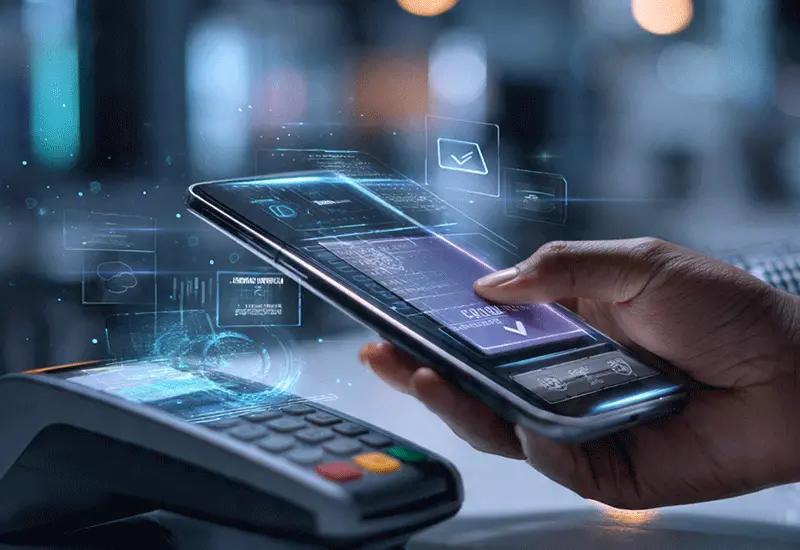
The coolest shift happening right now is embedded finance—which is really just a fancy term for putting financial tools directly inside everyday non-bank apps. Think about how you hail a ride on Uber or Bolt, order food, or sell goods on an e-commerce platform. Years ago, paying meant leaving the app, typing in a 16-digit card number, waiting for an SMS one-time password, and praying the network didn't time out.
Now? Money moves invisibly in the background. A driver finishes a trip and cashes out instantly to an in-app wallet. A small merchant on Shopify or a local social-commerce platform gets offered a working-capital loan right inside their dashboard because the platform already sees their daily sales. You buy a flight online and split the payment into three installments with one tap at checkout. In all these moments, you’re using banking services—payments, lending, insurance—without ever opening a banking app. As tech investors famously put it: every company is becoming a fintech company. The bank becomes invisible plumbing in the background, while the apps you actually enjoy using own the relationship.
- Digital Wallets Are Replacing the Traditional Account
For millions of people around the world—especially across Africa, Asia, and Latin America—the first real financial account they ever owned wasn't a traditional commercial bank. It was a digital wallet. Look at how platforms like M-Pesa in East Africa, OPay and PalmPay in Nigeria, PIX in Brazil, or Alipay in China completely rewired daily commerce. When you can send money to a street vendor using a phone number or QR code in two seconds flat—with zero failed transfers and zero monthly maintenance fees—waiting three business days for a traditional wire transfer feels like sending a letter by carrier pigeon.
Digital wallets stripped away the intimidation factor of legacy banking. No minimum balance requirements, no piles of paperwork just to open an account, and no hidden fees eating away at small balances. For a huge chunk of the planet, the phone is the bank branch.
- Stablecoins: The Internet’s Native Dollar
Now let’s talk about the quiet revolution happening underneath global payments: stablecoins. If you’ve ever tried sending money across borders—say, paying a remote developer in Lagos from London, or settling an invoice between Nairobi and Dubai—you know how broken international banking still is. Correspondent banks take days, wire fees eat a painful slice of small transfers, and volatile local currencies can lose purchasing power while your money is still stuck in transit.
Enter stablecoins like USDC and USDT—digital tokens pegged 1:1 to real-world currencies like the US dollar, moving over public blockchains 24/7, including weekends and holidays. Forget the wild crypto hype for a second. Strip away the speculation, and stablecoins are essentially programmable digital cash that moves at the speed of an email. Today, freelancers, importers, and fintech apps across emerging markets use stablecoins every single day to hold dollar value, pay international suppliers in minutes instead of days, and bypass clunky foreign-exchange bottlenecks. Even giants like Visa, Stripe, and PayPal have integrated stablecoin rails because they’re simply faster and cheaper than legacy SWIFT transfers.
- Decentralized Finance (DeFi): Banking Without a Middleman
If embedded finance hides the bank and stablecoins upgrade the currency, Decentralized Finance (DeFi) asks an even bolder question: What if we replaced the bank’s back office with open-source code?
In traditional finance, when you deposit money into a savings account, the bank lends it out at 15% interest and pays you 1%—keeping the spread to pay for executives, compliance teams, and skyscrapers.
In DeFi protocols like Aave or Uniswap, smart contracts (self-executing code on a blockchain) handle lending, borrowing, and currency swaps automatically. Anyone with an internet connection and a digital wallet can deposit assets to earn yield or borrow against collateral in seconds—no credit score check, no branch manager approval, and no geographical gatekeeping.
Is DeFi ready for your grandmother’s life savings yet? Honestly, not quite. User interfaces can still be intimidating, smart-contract bugs happen, and losing your private keys means nobody at a call center can reset your password. Yet as wallets get simpler and regulations mature, DeFi is quietly proving that core financial plumbing can run openly on software rather than behind closed corporate doors.
So, Will Banks Actually Vanish?
Probably not completely—at least not anytime soon. Traditional banks still hold massive regulatory licenses, government deposit insurance, and deep balance sheets that fintechs and crypto protocols quietly rely on behind the scenes. Even the slickest digital wallet usually parks customer funds inside a licensed partner bank at the end of the day.
What is dying is the old idea that a bank has to be a building you visit, an app you dread opening, or a gatekeeper deciding who deserves access to the modern economy.
The future of banking isn't really "bankless"—it’s unbundled and invisible. Payments live inside your chat and shopping apps, savings sit in high-yield digital wallets, cross-border money rides on stablecoins, and open financial protocols run 24/7 in the background. Banking used to be a place you went. Soon, it won't even be something you notice—it’ll just be how value moves, quietly, instantly, and everywhere at once.